In both fairy tales and fantasy, wands (the fairy godmother’s wand in Cinderella) and staffs (Gandalf’s staff in The Lord of the Rings) are used to call and/or invoke magic. These talismans usually serve as conduits for magical energy, and their linear shapes direct a spell or other enchantment according to its bearer.
Don’t you wish you had a magic wand … that would leave your home sparkling from top to bottom with a flick or a wrist?
Or maybe a powerful staff that could freeze time … while you figure out your next best move?
I won’t post a spoiler about how Hermes’ Wand is used in Daughter of Light, but I will share a snippet of its creation from Isolt’s Enchantment:
The dwarf god possessed as much skill over wood as he did over metal. He cut a branch from a towering white oak.
The spirit of the tree emerged. Crimson stained her fingers. She staunched the flow of blood from a gash in her side. “You bereave me with no consideration?”
Vulcan fumbled for words. His glance darted between the wood in his hand and the tree spirit’s wound. “I didn’t know you were alive.”
“Your lack of awareness is apparent.”
He held out the branch, to return it to her.
“No. It is like a child. Once born it cannot re-enter the womb. But know this: It will retain memory of the roots that birthed it.”
“I meant to use it for a gift.”
“Do with it what you will, but don’t steal from me again.”
“And your wound?”
“It will heal in time.” The tree spirit re-entered the white oak.
Hoping to appease her outrage, the abashed god whittled and scraped the wood with care. He risked a glance at the oak when he was finished.
The tree remained silent.
Vulcan admired the smooth and slender staff in his hands. The pale wood required no adornment. And yet, he desired his gift to be impressive. He called upon his cousin, Hermes. “Perhaps you could endow the rod with some contrary magic?”
The nimble messenger god hefted the staff. “You could crack a head with this.”
Vulcan flinched when his cousin smashed it against the stout trunk of a tree. When Hermes threw the rod to the ground and jumped upon it with both feet, Vulcan shouted, “Enough!”
Showing posts with label fairy tale. Show all posts
Tuesday, August 18, 2015
Saturday, November 1, 2014
Dia de los Muertos
Years ago, when I lived in El Paso, Texas I fell in love with many things... the desert, the moon hanging over the Franklin mountains, the abundance of roses, and the view of Mexico while driving I-10 to work every morning. But one of the things I carried with me when I left was the celebration of Dia De Los Muertos. From the moment I saw the colorful art in curio shops and the mall and my friends' homes I was intrigued by a day to honor the dead. I'd already lost my mother and three of my grandparents. To discover there was a heritage of celebrating the dearly departed with festivals, food, music, dance, and vividly painted skulls and crafts drowning in flowers heartened and revivified me. Honoring the dead, celebrating their life, and being grateful they were part of mine, made for a deeper healer. One that returned me fully restored to a life, that up until then, I'd been a bit ambivalent about living.
So it's not all that surprising to me that when I decided to write a horrific fairy tale for Halloween, it transformed into something utterly different. One that celebrates November 1st. Dia de Los Muertos. The Day of the Dead.
I Am Lily Dane, a contemporary retelling of Han's Christian Andersen's "The Shadow", is coming soon.
Tuesday, October 7, 2014
I Am Lily Dane by Heidi Garret
ABOUT I Am Lily Dane:
Lily Dane is a bright light. A spiritually barren, consuming flame, she befriends girls whose inner lives are rich with dreams and compelling desire. Their unapologetic souls fascinate her. However, Lily’s interest in her peers isn’t friendly, she’s obsessed with the machinations of crushing their spirits.
Lily also has a shadow who is sentient. A freak of nature? An abomination? Who knows? But Lily’s shadow is consumed with stopping the emotional and psychological devastation its host always leaves in her wake.
I Am Lily Dane, A Horrific Fairy Tale is a psychologically dark retelling of Han’s Christian Andersen’s “The Shadow".
Tuesday, August 26, 2014
How I Retold Hans Christian Andersen's "The Dryad"
The Tree Hugger, a Dystopian Fairy Tale is a retelling of Hans Christian Andersen’s “The Dryad.” I absolutely love the idea of spirits whose lives are connected with trees. However, in the original tale, the dryad is flighty (really?) and curious. As is often the case in fairy tales, that curiosity doesn’t go unpunished.
But I ask you: What is wrong with wanting to see more of the world?
Nothing!
So, on those two counts, I altered the tale. Rather than the flighty creature in Andersen’s tale, I believe a nature-spirt born with a direct relationship to trees would be steady, solid, focused, and determined. Thus, Mags was born. More apt to be silent and solitary, sturdy and resilient than whimsical and capricious.
And what about that trip? The fact that Andersen’s dryad got punished for her curiosity and sense of adventure just didn’t sit well with me. I wanted my tree hugger to find joy at the end of her journey, to rise above her trials and tribulations. Mags is also curious when she leaves home. But her curiosity is driven from a deep wound. And though her journey isn’t characterized by whimsy, there are some wild woods and a bit of enchantment along the way.
The third novella in my Once Upon a Time Today collection, The Tree Hugger is now available.
But I ask you: What is wrong with wanting to see more of the world?
Nothing!
So, on those two counts, I altered the tale. Rather than the flighty creature in Andersen’s tale, I believe a nature-spirt born with a direct relationship to trees would be steady, solid, focused, and determined. Thus, Mags was born. More apt to be silent and solitary, sturdy and resilient than whimsical and capricious.
And what about that trip? The fact that Andersen’s dryad got punished for her curiosity and sense of adventure just didn’t sit well with me. I wanted my tree hugger to find joy at the end of her journey, to rise above her trials and tribulations. Mags is also curious when she leaves home. But her curiosity is driven from a deep wound. And though her journey isn’t characterized by whimsy, there are some wild woods and a bit of enchantment along the way.
The third novella in my Once Upon a Time Today collection, The Tree Hugger is now available.
Saturday, August 23, 2014
How I Retold Hans Christian Andersen's "The Little Mermaid"
When I read the original version of the “The Little Mermaid”, I was surprised with its spiritual emphasis. None of the movie remakes or retellings I’d read conveyed the original tale’s underlying theme: Mermaids don’t have souls and the little mermaid wanted one. Rather profound. But it left me with a dilemma. I have two goals for each Once Upon a Time Today novella. The first is to update the story with characters and setting, the second is to remain true to the original fairy tale’s essence while providing some kind of twist.
I realized if I remained true to the essence of “The Little Mermaid”, I’d be grappling with spiritual themes. I chose to go ahead and twist the original tale by having a mortal at risk of losing her immortal soul.
Although the sea witch is a critical figure in the original tale, she doesn’t get a lot of stage time. I’d read Wicked years ago and loved the spin on the Wicked Witch of the West, so I decided to focus my retelling on “the witch” as well. One fun detail: We see the “original” little mermaid come to the sea witch’s lair and have quite an impact on the sea witch’s apprentice in Dreaming of the Sea.
When it came to setting, I decided to make use of the convent that served as an important place in the original tale. Out of that decision, Miriam was born. Miriam seems to be almost everyone’s favorite character. Determined, but also dreamy, her journey in the story is quite spectacular.
I realized if I remained true to the essence of “The Little Mermaid”, I’d be grappling with spiritual themes. I chose to go ahead and twist the original tale by having a mortal at risk of losing her immortal soul.
Although the sea witch is a critical figure in the original tale, she doesn’t get a lot of stage time. I’d read Wicked years ago and loved the spin on the Wicked Witch of the West, so I decided to focus my retelling on “the witch” as well. One fun detail: We see the “original” little mermaid come to the sea witch’s lair and have quite an impact on the sea witch’s apprentice in Dreaming of the Sea.
When it came to setting, I decided to make use of the convent that served as an important place in the original tale. Out of that decision, Miriam was born. Miriam seems to be almost everyone’s favorite character. Determined, but also dreamy, her journey in the story is quite spectacular.
Wednesday, August 20, 2014
How I Retold Han's Christian Andersen's "Beautiful"
I chose Han's Christian Andersen's "Beautiful" for the first retelling in my collection because beauty is something that has always moved and fascinated me, it's one of my obsessions. I do believe that whether one wishes to acknowledge it or not, beauty has a lot of power. However, the question of what is beautiful, is very personal. And though our perceptions of beauty are influenced by our families and culture, we all ultimately perceive the beautiful distinctly.
You see, I could go on and on...
In Andersen's tale, a male sculptor is besotted with a beautiful but quiet young lady. He misinterprets her reticence as depth and proceeds to marry her. As he lives with her, he discovers his wife's lack of speech isn't so much that "still waters run deep", more that she's rather passive and insipid. His awareness of her nature comes too late. It doesn't help that the young lady's overbearing mother moves in with the newlyweds.
I won't go into the rest of the tale here [SPOILER ALERT], but suffice it to say that by the end of the tale, the sculptor's eye for beauty has altered and matured.
To make this tale contemporary, I chose a female protagonist, Kerrin Mayham. She needed to be driven by beauty, so a film director seemed like the perfect profession. I wanted to remain true to the protagonist misjudging the interior of someone who was physically beautiful. Enter aspiring actor Anthony Zorr.
While he doesn't have an overbearing mother, he does have an aggressive agent in Marni Lamb. The story unfolds from there.
I added the narrative frame after the core story was written because I wanted to add another layer of enchantment to the tale. Allowing Kerrin to create a fairy tale by drawing from the experiences in her life, allowed me to recreate one of the special memories I shared with my own mother who seemed to spin the most fantastical tales out of nothing when I was child. But who knows? Perhaps she was drawing from the well of her experience too.
You see, I could go on and on...
In Andersen's tale, a male sculptor is besotted with a beautiful but quiet young lady. He misinterprets her reticence as depth and proceeds to marry her. As he lives with her, he discovers his wife's lack of speech isn't so much that "still waters run deep", more that she's rather passive and insipid. His awareness of her nature comes too late. It doesn't help that the young lady's overbearing mother moves in with the newlyweds.
I won't go into the rest of the tale here [SPOILER ALERT], but suffice it to say that by the end of the tale, the sculptor's eye for beauty has altered and matured.
To make this tale contemporary, I chose a female protagonist, Kerrin Mayham. She needed to be driven by beauty, so a film director seemed like the perfect profession. I wanted to remain true to the protagonist misjudging the interior of someone who was physically beautiful. Enter aspiring actor Anthony Zorr.
While he doesn't have an overbearing mother, he does have an aggressive agent in Marni Lamb. The story unfolds from there.
I added the narrative frame after the core story was written because I wanted to add another layer of enchantment to the tale. Allowing Kerrin to create a fairy tale by drawing from the experiences in her life, allowed me to recreate one of the special memories I shared with my own mother who seemed to spin the most fantastical tales out of nothing when I was child. But who knows? Perhaps she was drawing from the well of her experience too.
Tuesday, August 19, 2014
The Girl Who Believed in Fairy Tales
Loosely biographical, The Girl Who Believed in Fairy Tales is free! The three short stories chronicle the journey of a young girl spiritually sustained by fairy tales as she transforms into a woman who finds her place in the world by—what else?—writing fairy tales.
Monday, January 6, 2014
Fairy Tales and Finding Your Place in the World
Is The Weatherman a contemporary fairy tale? I'm going with yes. I've written about how fairy tales are tales of transformation that make use of symbols and archetypes. They're also stories about finding your place in the world. Most of the times, union with the perfect partner initiates the transition to becoming the ruler of your kingdom. However, that's not the case in The Weatherman, but I still think it can be considered a fairy tale.
The movie's main character, David Spritiz, is a middle-aged husband and father of two.
Nicolas Cage plays David. The movie is his fairy tale, because he's the overgrown kid/immature adult, and the story is about his transformation/growing up/finding his kingdom. His father, Robert Spritzel, is played by Michael Caine.
David is disconnected from his life: he phones it in. As the weatherman at a local TV station, David makes tons of money and doesn't work very hard for it. He's unfaithful to his wife and he's not an especially good father to his children. Whenever anyone recognizes him from his TV gig, he's not very gracious. He's kind of an asshole.
An asshole who really wants to move up in the world, i.e. get that weatherman gig on Hello America, a national TV show in New York City, because then, everything will be good. His father will respect him, his wife will love him, and his children will be blessed with perfection.
In the real world, his wife wants a divorce, his daughter is overweight—David's father is the only one who will acknowledge she's unhappy, and his fresh-out-of-rehab son is getting seduced by a pedophile. Then Robert is diagnosed with lymphoma. With a National Book Award, a Pulitzer, and President Carter calling him "a national treasure," he's a hard act to follow. The other bit, people throw things at David. Drive-bys. A Frosty, a Big Gulp, a fried apple pie, a soft taco, some falafel… the list goes on. It really pisses David off. It troubles his father—played with the gravitas that Michael Caine brings to the role—as well.
David is out of touch with reality. He doesn't really get how bad things have become, like he's under some lackluster spell. He tries to be playful with his wife, throws a snowball at her, and breaks her glasses. He takes his daughter to a winter picnic, and she tears her ACL in a potato-sack race. When his wife gets upset and her boyfriend intervenes, David has a public f&*k meltdown in the front yard. When he goes to a relationship workshop with his wife, he cheats on the trust exercise. It's pretty bad.
A year ago, he took his daughter to archery lessons, but she lost interest after the first lesson. He bought her a pack of them. As David's life falls apart, he returns to the archery club to take the unused lessons. After a few lessons, he brings his daughter back. The difference: This time he's the teacher. Although archery still doesn't interest her, he makes a greater attempt to find out what does. Things get tense when he learns that she wants to go bow hunting and kill animals. He doesn't want to kill animals. He invites her to go with him to his interview for the Hello America show in New York.
David's father joins them on the trip. He needs to see a specialist. The news isn't good. He has months to live. Confronted with his father's imminent death, David unleashes his frustration on his wife's boyfriend. Again. When it's over, David muses as he drives his father home.
"Here's something that, if you want your father to think you're not a silly f&*k, don't slap a guy across the face with a glove. Because if you do that, that's what he will think, unless your a nobleman or something in the nineteenth century, which I'm not."
The turning point comes when he's offered the Hello America job. He goes to his father's living funeral and tells his wife about the job offer, hoping she'll want to reconcile. She tells hims she's marrying her boyfriend. David goes outside to shoot his bow and arrow. When the boyfriend comes out for a smoke, David considers shooting him. When David returns inside to deliver his speech, he delivers his first line: "When I think of my dad, I think of Bob Seger's Like a Rock," and the power goes out. He never gets to finish the speech.
One of the most poignant moments in the film follows. David and Robert are sitting in the car. Robert plays Like a Rock on the car stereo, and says, "I don't really get it."
David says, it's this, "And I held firmly to what I felt was right, like a rock." He and his father finally connect. Robert passes on his last nugget of wisdom before he passes:
"In this shit life, we must chuck some things."

Before the movie ends, David gets that job with Hello America. It doesn't save his marriage, but he's finally able to let it go and accept his himself as the person he's truly become, The Weatherman.
His Happily Ever After? He walks around New York City with a bow and bag of arrows slung over his shoulder, and no one throws fast food at him ever again. He's inner transformation has radiated to the external world.
The symbols in the story?
I'd go with: The bow and arrow symbolizing the straight and true path/character; the fast food, (this one's directly addressed in the movie) society's contempt; and that job at Hello America is David inheriting his kingdom— finding his place in the world.
It's a beautiful, low-key, human story. I'm always puzzled by how much I love it, but I do love Nicolas Cage, and as I've been trying to say, for me, it's a fairy tale... and you know, I love fairy tales.
The movie's main character, David Spritiz, is a middle-aged husband and father of two.
Nicolas Cage plays David. The movie is his fairy tale, because he's the overgrown kid/immature adult, and the story is about his transformation/growing up/finding his kingdom. His father, Robert Spritzel, is played by Michael Caine.David is disconnected from his life: he phones it in. As the weatherman at a local TV station, David makes tons of money and doesn't work very hard for it. He's unfaithful to his wife and he's not an especially good father to his children. Whenever anyone recognizes him from his TV gig, he's not very gracious. He's kind of an asshole.
An asshole who really wants to move up in the world, i.e. get that weatherman gig on Hello America, a national TV show in New York City, because then, everything will be good. His father will respect him, his wife will love him, and his children will be blessed with perfection.
In the real world, his wife wants a divorce, his daughter is overweight—David's father is the only one who will acknowledge she's unhappy, and his fresh-out-of-rehab son is getting seduced by a pedophile. Then Robert is diagnosed with lymphoma. With a National Book Award, a Pulitzer, and President Carter calling him "a national treasure," he's a hard act to follow. The other bit, people throw things at David. Drive-bys. A Frosty, a Big Gulp, a fried apple pie, a soft taco, some falafel… the list goes on. It really pisses David off. It troubles his father—played with the gravitas that Michael Caine brings to the role—as well.
David is out of touch with reality. He doesn't really get how bad things have become, like he's under some lackluster spell. He tries to be playful with his wife, throws a snowball at her, and breaks her glasses. He takes his daughter to a winter picnic, and she tears her ACL in a potato-sack race. When his wife gets upset and her boyfriend intervenes, David has a public f&*k meltdown in the front yard. When he goes to a relationship workshop with his wife, he cheats on the trust exercise. It's pretty bad.
A year ago, he took his daughter to archery lessons, but she lost interest after the first lesson. He bought her a pack of them. As David's life falls apart, he returns to the archery club to take the unused lessons. After a few lessons, he brings his daughter back. The difference: This time he's the teacher. Although archery still doesn't interest her, he makes a greater attempt to find out what does. Things get tense when he learns that she wants to go bow hunting and kill animals. He doesn't want to kill animals. He invites her to go with him to his interview for the Hello America show in New York.
David's father joins them on the trip. He needs to see a specialist. The news isn't good. He has months to live. Confronted with his father's imminent death, David unleashes his frustration on his wife's boyfriend. Again. When it's over, David muses as he drives his father home.
"Here's something that, if you want your father to think you're not a silly f&*k, don't slap a guy across the face with a glove. Because if you do that, that's what he will think, unless your a nobleman or something in the nineteenth century, which I'm not."
The turning point comes when he's offered the Hello America job. He goes to his father's living funeral and tells his wife about the job offer, hoping she'll want to reconcile. She tells hims she's marrying her boyfriend. David goes outside to shoot his bow and arrow. When the boyfriend comes out for a smoke, David considers shooting him. When David returns inside to deliver his speech, he delivers his first line: "When I think of my dad, I think of Bob Seger's Like a Rock," and the power goes out. He never gets to finish the speech.
One of the most poignant moments in the film follows. David and Robert are sitting in the car. Robert plays Like a Rock on the car stereo, and says, "I don't really get it."
David says, it's this, "And I held firmly to what I felt was right, like a rock." He and his father finally connect. Robert passes on his last nugget of wisdom before he passes:
"In this shit life, we must chuck some things."

Before the movie ends, David gets that job with Hello America. It doesn't save his marriage, but he's finally able to let it go and accept his himself as the person he's truly become, The Weatherman.
His Happily Ever After? He walks around New York City with a bow and bag of arrows slung over his shoulder, and no one throws fast food at him ever again. He's inner transformation has radiated to the external world.
The symbols in the story?
I'd go with: The bow and arrow symbolizing the straight and true path/character; the fast food, (this one's directly addressed in the movie) society's contempt; and that job at Hello America is David inheriting his kingdom— finding his place in the world.
It's a beautiful, low-key, human story. I'm always puzzled by how much I love it, but I do love Nicolas Cage, and as I've been trying to say, for me, it's a fairy tale... and you know, I love fairy tales.
Tuesday, October 29, 2013
Symbols and Archetypes in Fairy Tales
Symbols and archetypes are powerful fairy tale elements. Both activate the unconscious and the imagination.
What is a symbol? It's an object that represents or stands in for an idea, belief, action, or something else. The glass slipper in Cinderella, the shard of broken mirror in The Snow Queen, Rumpelstiltskin weaving straw into gold.
What is an archetype? At its most basic, it's a role—one that we all grasp at an instinctual level, the King, the Queen, the Joker, the Thief.
By making use of symbols and archetypes, stories that might be considered simple become more complex, as they radiate through each individual in a personal way. Profound understandings and connections can be quickly sparked, through images that tap into deeper levels of consciousness. Because no matter how many times, nor how many ways, fairy tales are told and retold, we add our own inner details to Cinderella, the Evil Stepmother, Sleeping Beauty, the Wicked Witch, the Big Bad Wolf, and the Deep Woods.
Over and over, the relatable psychological symbolism of fairy tales, serve as a short-hand for bridging individuals with universal truth. Pretty much, in a way that other stories can't. I think that's why fairy tales are so enduring, why we tell them and re-tell them. And why they are so darn satisfying.
The Tarot is a set of cards that, like fairy tales, have been around for a long time. There are hundreds of different tarot decks, kind of like the many fairy tale retellings. An individual artist puts their personal spin on an archetypal image. The image isn't replaced, it simply wears a different set of clothes.
I thought it would be fun to show the tarot spread I created for The Girl Who Watched for Elves, one of the short stories that serves as a prelude to the Once Upon a Time Today collection. One of the things you might notice is that tenth card in the spread, the one on the bottom row on the far left, 'the elf card,' doesn't appear exactly as it's described in the story.
The Twenty-Card Spread in The Girl Who Watched for Elves ~ Hanson-Roberts Tarot Deck
That's because the story was written by combining the images from the above deck, with the most traditional and popular tarot deck, the Rider-Waite deck.
Now, take a look at the "Eight of Pentacles" in that deck. Ask yourself: If you saw that picture, would you see an elf? Possibly—probably—not! But during the tarot reading in the story, Heather was taking a trip down memory lane, and she knew the next chapter in her story was her reunion with her grandmother. She also know how much the story, The Shoemaker and the Elves, meant to her. She saw the card, according to her personal history. That's what we do with symbols and archetypal images. We personalize them. Because of their simplicity, it's almost impossible not to.
Transformational themes, symbols, archetypes—these elements contribute to the enduring and beguiling nature of fairy tales.
Labels:
archetypes,
elves,
fairy tale,
fairy tales,
fairytale,
free ebooks,
Free Kindle,
Freebie,
symbols,
tarot
Friday, June 7, 2013
grumpy, lovable—and wounded ... Flora's Secret by Enya
Today's excerpt from Half Faerie and playlist song highlight Flora, the grumpy, lovable, wise—and wounded—spring faerie. In my wildest dreams, Peter Jackson directs Daughter of Light and Kathy Bates stars as Flora. SIGH.
From Half Faerie, "Chapter 45: A Dinner Party"
“One day the muannai will be as free to travel between the Mortal and Enchanted worlds as the rest of you are. That’s my dream,” Goring said.
“No, they won’t,” Flora said.
“Ah. You can foresee the future. Is that a special talent spring faeries possess?”
“Anyone can read the times, compare them to the winds of change, and draw their own conclusion.”
“Now you’re a poet.”
“Flattery doesn’t become you, Zachariah. Umbra’s incarnation will close the ancient doors. It won’t open new ones,” Flora said.
Goring twisted the cuff of his fitted white shirt. “And you know this, how?”
“The Whole is self-protecting, and Umbra is mortal ash. Everything about him is dead to the Mortal World. Incarnated or not, it will repel him.”
“Then why bother?”
“No one argues the Whole is out of balance. That something must be done,” Flora said.
Goring prodded her. “Least of all you.”
Her eyes flashed. “Least of all me.”
The muannaye leaned back in his chair. “The truth is that none of us here, at this table, or anywhere in the Whole, know what new age Umbra’s incarnation will usher in.”
Flora raised her glass of beer. “But we can all agree that it will be a new one.”
Goring picked up his glass to match Flora’s toast. “To the advent of a new age, a springtime in history,” he said.
This week's song comes from @RachmiFebrianty's Half Faerie playlist. She selected "Flora's Secret" by Enya as the perfect musical expression of the spring faerie's soul…I agree.
And yes, Flora does have a secret…
From Half Faerie, "Chapter 45: A Dinner Party"
“One day the muannai will be as free to travel between the Mortal and Enchanted worlds as the rest of you are. That’s my dream,” Goring said.
“No, they won’t,” Flora said.
“Ah. You can foresee the future. Is that a special talent spring faeries possess?”
“Anyone can read the times, compare them to the winds of change, and draw their own conclusion.”
“Now you’re a poet.”
“Flattery doesn’t become you, Zachariah. Umbra’s incarnation will close the ancient doors. It won’t open new ones,” Flora said.
Goring twisted the cuff of his fitted white shirt. “And you know this, how?”
“The Whole is self-protecting, and Umbra is mortal ash. Everything about him is dead to the Mortal World. Incarnated or not, it will repel him.”
“Then why bother?”
“No one argues the Whole is out of balance. That something must be done,” Flora said.
Goring prodded her. “Least of all you.”
Her eyes flashed. “Least of all me.”
The muannaye leaned back in his chair. “The truth is that none of us here, at this table, or anywhere in the Whole, know what new age Umbra’s incarnation will usher in.”
Flora raised her glass of beer. “But we can all agree that it will be a new one.”
Goring picked up his glass to match Flora’s toast. “To the advent of a new age, a springtime in history,” he said.
This week's song comes from @RachmiFebrianty's Half Faerie playlist. She selected "Flora's Secret" by Enya as the perfect musical expression of the spring faerie's soul…I agree.
And yes, Flora does have a secret…
Labels:
beer,
Daughter of Light,
Enya,
Epic Fantasy,
fairy tale,
fairy tales,
Fantasy,
Flora,
Flora's Secret,
half faerie,
Kathy Bates,
LOTR,
Peter Jackson
Monday, June 3, 2013
Giveaway: The Short and Long of It
Would you rather read three shorter books?
Or one longer book?
We're going to give away 4 ebook sets of the first three books in the Queen of the Realm of Faerie fantasy fairytale series (Nandana's Mark, The Flower of Isbelline, and The Dragon Carnviale), AND 4 ebook copies of True Love's First Kiss (a compilation of the first three books in the series)!
How can you win?
Tell us whether you prefer your books shorter or longer in a comment below.
If you prefer shorter books, you'll be eligible to win one of the 4 ebook sets. If you prefer longer books, you'll be eligible to win one of the 4 ebook compilations. The winners will be picked in a random drawing. Please leave your email address in your comment so we can contact the winners.
Want to increase your odds of winning?
Tweet about this giveaway.
Include a link to this giveaway page, mention @heidigwrites, and use the hashtag #longer or #shorter in every tweet for more entries! Each tweet will count as one additional entry.
This contest will run until midnight PST on Sunday, June 16, 2013. The winners will be announced on this blog on Monday, June 17, 2013.
In the Enchanted World, true love’s first kiss is magic.
Nandana’s Mark, Book 1: When two half-faeries—Melia and her younger sister—are cursed under dreadful circumstances, true love’s first kiss is the remedy.
The Flower of Isbelline, Book 2: Nothing but true love’s first kiss can save Melia’s younger sister from blind ambition and ruin.
The Dragon Carnivale, Book 3: Melia must choose the freedom she cherishes or true love’s first kiss—and a relationship that promises to secure her place in the Whole.
Queen of the Realm of Faerie is a fairy tale fantasy series that bridges the Mortal and Enchanted worlds. It is also an epic fantasy. The main character, Melia, is an eighteen-year-old half-faerie, half-mortal.
When the story opens in the first book, Melia is troubled by her dark moon visions, gossip she overhears about her parents at the local market, and the trauma of living among full-blooded faeries with wings—she doesn’t have any.
As the series unfolds, the historic and mystical forces that shape Melia’s life are revealed. Each step of her journey—to find the place where she belongs—alters her perceptions about herself, deepens her relationships with others, and enlarges her world view.
True Love’s First Kiss is a compilation of the first three books in this ongoing series.
Note: We've been notified that some people are still unable to make comments. GRRR!!!!! and Sorry!!!!! Not sure why that is, if anyone knows… Otherwise, if you try to make a comment and can't, please email me at heidi _ g @ comcast . net! I'll post your entry for you, Thank you.
Friday, May 31, 2013
The Weekly Extract: none of that Pixie Dust & Evanescence…She's Going Under
Last week's excerpt featured Tuck, a tree elf (think Orlando Bloom's Legolas in The Lord of the Rings). Tatou was furious because he was blind to the danger surrounding everyone else. All he could see was Plantine, Melia's younger sister and his true love. But maybe he had a point, and Plantine is in more trouble than anyone realizes….
From Half Faerie ...
“Did you hear Plantine? The stronghold’s throne is not enough for her. She wants the one at the Cathedral Palace, too.” Tatou whispered, although Plantine was so engrossed with Flora’s grief, she wouldn’t have heard the pixie if she yelled. “She wants to be the Queen of the Realm of Faerie.”
“She’ll be a tyrant,” Melia said.
“Tuck may be the only one who can reach her.”
“She’ll never agree to see him.”
“We have to convince her that seeing him is the right thing for her and everyone else.”
“May I enter?” Chloe stood in the doorframe.
Plantine ignored her. She helped Flora into her enormous bed.
“She’s not feeling well,” Melia said.
Chloe nodded. “Yrrick has announced a dinner party. Lord Goring would like to welcome his bride’s sister and her friends to the stronghold.”
Dread echoed in the hollow of Melia’s chest.
Plantine rushed from Flora’s side. “You brought more friends?”
“A priest from Idonne, a m—” Melia caught herself. They’d left Sinjiin in the Welcoming Hall in his tiger form. If he wanted Chloe—or anyone else at the Calashai—to know he was a mage, he could tell them himself. “—his pet tiger, and a tree elf.”
Plantine’s eyes glinted with dark temper. “A tree elf?”
“Yes,” Melia said.
Plantine turned away from the servant. She pressed her palms together and closed her eyes. “Thank you, Chloe. You may leave us now.”
The muannaye curtseyed and departed.
“I told you not to bring him here,” Plantine said.
Tatou darted towards her.
“If you throw anymore of that pixie dust on me, I’ll have you locked up,” Plantine warned.
The pixie hovered in front of Plantine’s face with her hand in her pocket. Melia held her breath. It was the last dark moon night in the moon cycle, and it looked like it was going to be a long one.
This week when you listen to the awesome Amy Lee singing Going Under, think of Plantine going under Umbra's influence—Umbra is the mortal ash accumulating in the Void that wants to use her as a vessel of incarnation.
From Half Faerie ...
“Did you hear Plantine? The stronghold’s throne is not enough for her. She wants the one at the Cathedral Palace, too.” Tatou whispered, although Plantine was so engrossed with Flora’s grief, she wouldn’t have heard the pixie if she yelled. “She wants to be the Queen of the Realm of Faerie.”
“She’ll be a tyrant,” Melia said.
“Tuck may be the only one who can reach her.”
“She’ll never agree to see him.”
“We have to convince her that seeing him is the right thing for her and everyone else.”
“May I enter?” Chloe stood in the doorframe.
Plantine ignored her. She helped Flora into her enormous bed.
“She’s not feeling well,” Melia said.
Chloe nodded. “Yrrick has announced a dinner party. Lord Goring would like to welcome his bride’s sister and her friends to the stronghold.”
Dread echoed in the hollow of Melia’s chest.
Plantine rushed from Flora’s side. “You brought more friends?”
“A priest from Idonne, a m—” Melia caught herself. They’d left Sinjiin in the Welcoming Hall in his tiger form. If he wanted Chloe—or anyone else at the Calashai—to know he was a mage, he could tell them himself. “—his pet tiger, and a tree elf.”
Plantine’s eyes glinted with dark temper. “A tree elf?”
“Yes,” Melia said.
Plantine turned away from the servant. She pressed her palms together and closed her eyes. “Thank you, Chloe. You may leave us now.”
The muannaye curtseyed and departed.
“I told you not to bring him here,” Plantine said.
Tatou darted towards her.
“If you throw anymore of that pixie dust on me, I’ll have you locked up,” Plantine warned.
The pixie hovered in front of Plantine’s face with her hand in her pocket. Melia held her breath. It was the last dark moon night in the moon cycle, and it looked like it was going to be a long one.
This week when you listen to the awesome Amy Lee singing Going Under, think of Plantine going under Umbra's influence—Umbra is the mortal ash accumulating in the Void that wants to use her as a vessel of incarnation.
Friday, May 24, 2013
Weekend Extract: Tatou's hot temper plus Imagine Dragons
I have two treats for you today. How about we start off with an extract from Half Faerie? One featuring Tatou and her hot pixie temper…
From Half Faerie, "Chapter 36: A Field of Lilies"
“You couldn’t have stopped last night’s attack,” Tatou said. “There were too many of them.”
“There were only two,” Melia whispered.
“No,” Tatou said. “You’re forgetting about the archers. When Clover took me to the stream, the woods were thick with them. If you’d arrived earlier, they would’ve killed you.”
“They’ll do worse with Plantine if we don’t reach her in time,” Tuck said.
“Lord Goring needs her,” the pixie said. “He won’t let anything happen to her.”
Melia raised her eyebrows at her friend.
“What? He thinks Plantine is the only one in danger?” Tatou asked.
Tuck pushed away from the table. “That’s not what I meant.”
“Then what did you mean?” The pixie walked across the table to stand in front of him. “Those wolves would have swallowed me whole last night if Clover hadn’t had the good sense to hide me. Did you see the wounds on Flora’s back? Or notice the burns on her face? We’re all getting hurt trying to help Plantine.”
Tuck raised his hands. “I’m sorry, you’re right. I’m thinking only of Melia’s sister because I know how vulnerable she is from her mother’s curse.”
Tatou’s pixie temper soared. “Not too vulnerable to get the basin’s location and send—”
Gumf slammed the table with the palms of his hand. “Both of you, stop it.”
The tree elf and the pixie stared daggers at one another.
“You’re all on edge,” the Veil’s proprietor said. As if on cue, three dwarves appeared by his side. “Let them take you to your rooms. Bathe and get some rest tonight. You can continue your journey in the morning.”
No one moved.
Number two is special. Rachmi Febrianty created a brilliant playlist for the Daughter of Light trilogy. I've been listening to the songs over and over. And while I'm figuring out how to share them all with you, let me leave you with her suggestion for a song from Tuck to Plantine…it's perfect.
Please enjoy Bleeding Out by Imagine Dragons…
From Half Faerie, "Chapter 36: A Field of Lilies"
“You couldn’t have stopped last night’s attack,” Tatou said. “There were too many of them.”
“There were only two,” Melia whispered.
“No,” Tatou said. “You’re forgetting about the archers. When Clover took me to the stream, the woods were thick with them. If you’d arrived earlier, they would’ve killed you.”
“They’ll do worse with Plantine if we don’t reach her in time,” Tuck said.
“Lord Goring needs her,” the pixie said. “He won’t let anything happen to her.”
Melia raised her eyebrows at her friend.
“What? He thinks Plantine is the only one in danger?” Tatou asked.
Tuck pushed away from the table. “That’s not what I meant.”
“Then what did you mean?” The pixie walked across the table to stand in front of him. “Those wolves would have swallowed me whole last night if Clover hadn’t had the good sense to hide me. Did you see the wounds on Flora’s back? Or notice the burns on her face? We’re all getting hurt trying to help Plantine.”
Tuck raised his hands. “I’m sorry, you’re right. I’m thinking only of Melia’s sister because I know how vulnerable she is from her mother’s curse.”
Tatou’s pixie temper soared. “Not too vulnerable to get the basin’s location and send—”
Gumf slammed the table with the palms of his hand. “Both of you, stop it.”
The tree elf and the pixie stared daggers at one another.
“You’re all on edge,” the Veil’s proprietor said. As if on cue, three dwarves appeared by his side. “Let them take you to your rooms. Bathe and get some rest tonight. You can continue your journey in the morning.”
No one moved.
Number two is special. Rachmi Febrianty created a brilliant playlist for the Daughter of Light trilogy. I've been listening to the songs over and over. And while I'm figuring out how to share them all with you, let me leave you with her suggestion for a song from Tuck to Plantine…it's perfect.
Please enjoy Bleeding Out by Imagine Dragons…
Saturday, March 16, 2013
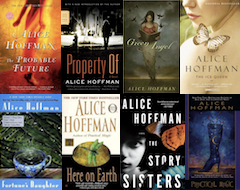
The Place Alice Hoffman Creates
Welcome to the Alice Hoffman Birthday Blog Hop! Today, March 16, 2013, I'm thrilled to be celebrating Alice Hoffman's birthday with other readers who love her unique and inimitable voice. Please visit all the sites linked at the bottom of this post for the complete experience!
I intended to write this post on Claire Story of The Story Sisters, having recently read the book for the second time. The first time I read it I fell in love with Elv. Her fierce love of horses, her inability to reduce her sensitivities to socially acceptable levels, her sacrifice of self to protect her youngest sister, along with her ability to see fairies and demons, kept me glued to every page. And when her life took an unexpected twist I sat in my papasan chair and sobbed. Not the dainty, a few hot tears rolling down my cheeks, sniffles, no, it was the snorting, messy kind that you never want another human being to witness, but feels so cleansing when it’s over.
Brave, reckless Elv. I resurrected a pair of black leather cowboy boots with pointy toes and got another tattoo, a daisy fairy on my left hip.
But after the second read, I’m on the lookout for charms.
Because this time, I'm enthralled with Claire. She’s the one who was strong enough to love both her sisters. Which brings me to another thing I love about The Story Sisters, it’s unflinching when it comes to the girl’s complex relationships. I have a friend who is an only child and doesn’t get how beastly sisters can be to one another.

I have sisters. Our relationships are strained and complicated, too. Perhaps that’s why these words in Arnish—spoken at dusk—can bring tears to my eyes: Nom brava gig. My brave sister. Reunina lee. I came to rescue you. Alana me sora minta. Roses wherever you looked.
My sisters are velvety petals with thorns, too.
Claire won me over with her silence. And her rebirth. Learning to make jewelry, mastering the craft. No matter how conventional wisdom goes on and on about family and friends, sometimes soulful work is the only thing that keeps some of us alive.
So that was my plan for this first Alice Hoffman Birthday Blog Hop, gush about Claire Story and Arnish, maybe Pollo—and Pete who wraps all the broken Story women in bandages of strength and dignity while they conjure the will to move forward, but now I’m reading The Red Garden. Quite frankly, I’m a little bit stunned.
It’s a collection of contemporary-ish fairy tales. I’m not a fan of short stories. Perhaps because it seems like a lot of investment, getting to know the characters, the setting, etc. and then—whiff—they’re gone. It’s over. But I read Leaf Storm by Gabriel Garcia Marquez last year, and found it enjoyable and fascinating. Marquez linked his collection of stories around a single place, the fictional town of Macondo, Colombia. When I discovered all the tales in Hoffman’s The Red Garden wind around and through rural Blackwell, Massachusetts, I became curious.
There are fourteen tales. I’ve read seven. The stunned part is how each one builds, externally, the literal place of Blackwell, and internally, the pressure upon the heart of the reader. It all begins with Hallie finding refuge in that bear. And her cub. And then comes John Chapman with his apple seeds and innocent passion. By the time Sophia snatches up the card of death and Amy is buried in her blue dress and bare feet, the magic is palpable. When Emily’s long walk ends in the frenzied creation of a scent-focused garden for Charlie who’s lost his sight, we’re left with a taste of wistful in the mouth and the sense of crushed potpourri in the hand.
Remember Amy and her blue dress? She may be gone, but somehow she manages to save Evan and Mattie when nothing and no one else can. But when Topsy, the elephant, dies, it leaves a gash in your heart. Thank goodness, he gets reborn as a pug whose devotion will make you remember that man is a syllable of woman.
I can’t wait to read The Fisherman’s Wife tonight.
Because in The Red Garden Alice Hoffman has doubled her creation of place.
Since Jess and I decided we wanted to create this blog hop, I’ve been asking myself: What is it about Hoffman’s work that moves me, affects me, wrings me out on such deep levels?
With her stories, Hoffman creates a place for the weary, the wounded, the ravaged, the savaged, the damaged, the self-contained, and the lonely, to take off their hats and coats and rest. Among the world of her characters we’re not too sensitive, we’re not too broken, we’re not too full of sorrow, and we’re not beyond comprehension; we’re one of them.
I think that’s why I have to read an Alice Hoffman book every few months. Sometimes daily life breaks me down, breaks down the things about me that I love about myself; reading Alice Hoffman is getting an IV drip. In her pages, I get to live in a world where I’m not too weird—spinning off an another wavelength—I’m the norm. It’s such solace. It’s so hopeful. It reconnects me to humanity.
And that is a holy thing.
Thank you, Alice.
I intended to write this post on Claire Story of The Story Sisters, having recently read the book for the second time. The first time I read it I fell in love with Elv. Her fierce love of horses, her inability to reduce her sensitivities to socially acceptable levels, her sacrifice of self to protect her youngest sister, along with her ability to see fairies and demons, kept me glued to every page. And when her life took an unexpected twist I sat in my papasan chair and sobbed. Not the dainty, a few hot tears rolling down my cheeks, sniffles, no, it was the snorting, messy kind that you never want another human being to witness, but feels so cleansing when it’s over.Brave, reckless Elv. I resurrected a pair of black leather cowboy boots with pointy toes and got another tattoo, a daisy fairy on my left hip.
But after the second read, I’m on the lookout for charms.
Because this time, I'm enthralled with Claire. She’s the one who was strong enough to love both her sisters. Which brings me to another thing I love about The Story Sisters, it’s unflinching when it comes to the girl’s complex relationships. I have a friend who is an only child and doesn’t get how beastly sisters can be to one another.

I have sisters. Our relationships are strained and complicated, too. Perhaps that’s why these words in Arnish—spoken at dusk—can bring tears to my eyes: Nom brava gig. My brave sister. Reunina lee. I came to rescue you. Alana me sora minta. Roses wherever you looked.
My sisters are velvety petals with thorns, too.
Claire won me over with her silence. And her rebirth. Learning to make jewelry, mastering the craft. No matter how conventional wisdom goes on and on about family and friends, sometimes soulful work is the only thing that keeps some of us alive.
So that was my plan for this first Alice Hoffman Birthday Blog Hop, gush about Claire Story and Arnish, maybe Pollo—and Pete who wraps all the broken Story women in bandages of strength and dignity while they conjure the will to move forward, but now I’m reading The Red Garden. Quite frankly, I’m a little bit stunned.
It’s a collection of contemporary-ish fairy tales. I’m not a fan of short stories. Perhaps because it seems like a lot of investment, getting to know the characters, the setting, etc. and then—whiff—they’re gone. It’s over. But I read Leaf Storm by Gabriel Garcia Marquez last year, and found it enjoyable and fascinating. Marquez linked his collection of stories around a single place, the fictional town of Macondo, Colombia. When I discovered all the tales in Hoffman’s The Red Garden wind around and through rural Blackwell, Massachusetts, I became curious.
There are fourteen tales. I’ve read seven. The stunned part is how each one builds, externally, the literal place of Blackwell, and internally, the pressure upon the heart of the reader. It all begins with Hallie finding refuge in that bear. And her cub. And then comes John Chapman with his apple seeds and innocent passion. By the time Sophia snatches up the card of death and Amy is buried in her blue dress and bare feet, the magic is palpable. When Emily’s long walk ends in the frenzied creation of a scent-focused garden for Charlie who’s lost his sight, we’re left with a taste of wistful in the mouth and the sense of crushed potpourri in the hand.
Remember Amy and her blue dress? She may be gone, but somehow she manages to save Evan and Mattie when nothing and no one else can. But when Topsy, the elephant, dies, it leaves a gash in your heart. Thank goodness, he gets reborn as a pug whose devotion will make you remember that man is a syllable of woman.
I can’t wait to read The Fisherman’s Wife tonight.
Because in The Red Garden Alice Hoffman has doubled her creation of place.
Since Jess and I decided we wanted to create this blog hop, I’ve been asking myself: What is it about Hoffman’s work that moves me, affects me, wrings me out on such deep levels?
With her stories, Hoffman creates a place for the weary, the wounded, the ravaged, the savaged, the damaged, the self-contained, and the lonely, to take off their hats and coats and rest. Among the world of her characters we’re not too sensitive, we’re not too broken, we’re not too full of sorrow, and we’re not beyond comprehension; we’re one of them.
I think that’s why I have to read an Alice Hoffman book every few months. Sometimes daily life breaks me down, breaks down the things about me that I love about myself; reading Alice Hoffman is getting an IV drip. In her pages, I get to live in a world where I’m not too weird—spinning off an another wavelength—I’m the norm. It’s such solace. It’s so hopeful. It reconnects me to humanity.
And that is a holy thing.
Thank you, Alice.
Subscribe to:
Posts (Atom)